
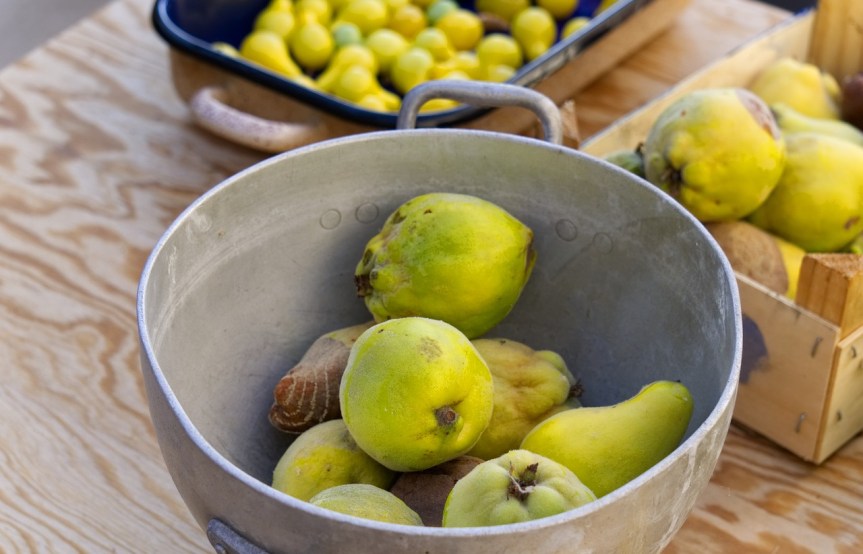

Autumn is the time when quinces ripen and are ready for harvesting. They are a fruit, somewhat bigger than apples and firmer in their flesh. They have a slightly sour taste, are healthy and very tasty. In kitchens of days gone by they were staples for marmalade, jam, compote, jelly, cakes and medicinal concoctions.
Today their use has diminished, too arduous is their processing. Occasionally they can be found as a side to savory dishes in the form of a base for chutneys. However, this versatile fruit, high in Vitamin C and in the old days praised for it’s effect in colds and digestive complaints, makes the perfect, almost forgotten autumn or Christmas treat – Quince bread.
Not a bread at all, but a delicious jelly bite that beats any fruit gums in taste, is so much healthier and not at all that hard to make.
It only takes a few ingredients to make quince bread.
1-1.5kg of quinces
1 kg of sugar
Juice of 3-4 lemons
Wash the quinces well and rub them dry to remove all of the velvety layer on the skin. Cut the quinces into small pieces (1-2cm in size) removing the core and the seeds. Transfer to a cooking pot, add the sugar and the lemon juice and cook over medium heat until the fruit chunks are fairly tender. This will take between 40 to 60 minutes. Stir often to assure that the fruits do not set and burn at the bottom of the pot.
Remove the pot from the heat and use a mixer or other kitchen aid to puree the quinces. Place the mousse back into a pot and simmer, while stirring, until the mixture is thick and pasty.
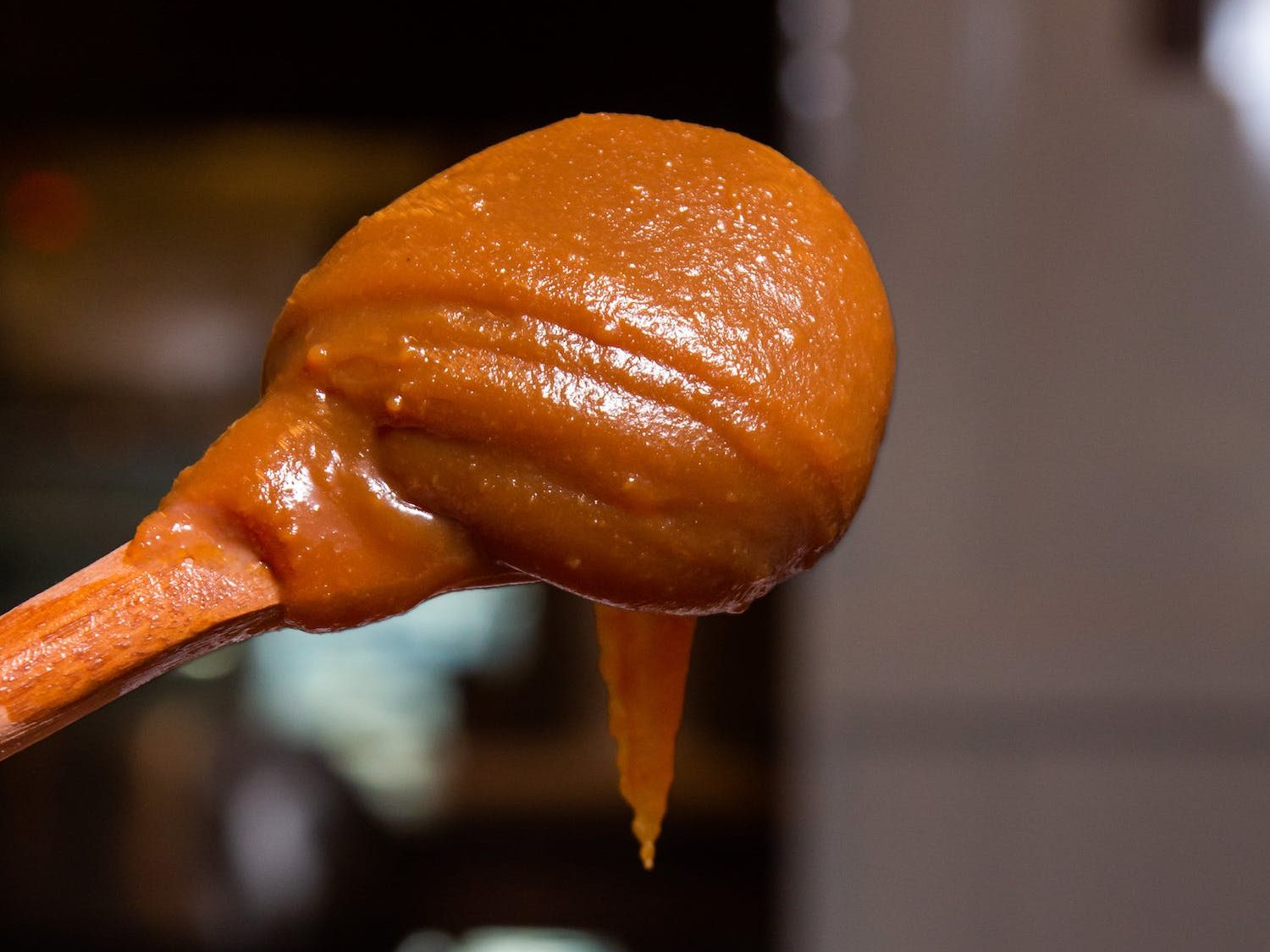
Spread the quince mixture onto one or two baking trays lined with baking paper and transfer to the oven. The thickness of the mouse layer can vary and is pretty much down to ones own taste. A little less than about 1cm thickness makes a tasty ‘bread’.
‘Dry’ these sheets of quince mouse in the oven on low heat for as long as it takes for the bread to no longer stick too much and the back of a spoon can not be dipped into the mouse pulling it off the parchment paper upon removal. This process can take between 4 and 5 hours or more. Alternatively the mouse can be dried in a warm and dry place over several days, but needs to be turned over once ‘dry’ on one side.
Remove the ‘bread’ from the oven and allow to cool. The color should have changed to a dark red or dark maroon. Once cooled “peel” the quince jelly off the parchment paper, cut into shapes and sprinkle with coarse sugar. Alternatively you ca dip the shapes into chocolate for a chocolaty treat. Keep in a dry, airtight container.
Enjoy!


 Wisdom of Old