
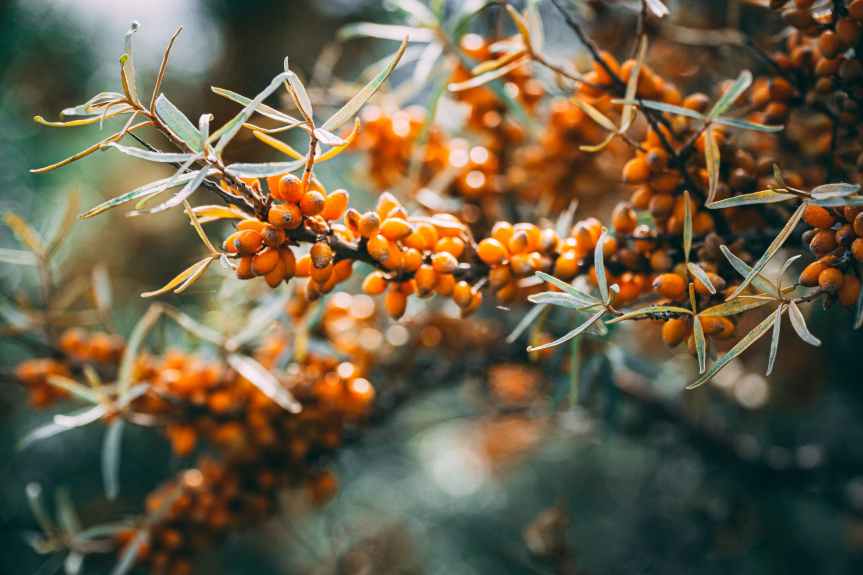

Having been high on the list of healthy remedies of many a mother and grandmother in the past, Sea buckthorn is increasingly attracting the attention of the health industry and is climbing high on the list of upcoming superfoods.
From an unimpressive shrub, the plump yellow fruits contain a huge variety of over 200 bioactive components that have been found to have an expansive range of benefits to human health. Vitamins, fatty acids, amino acids, and minerals make Sea Buckthorn a most valuable ‘best kept secret’.
It’s health benefiting properties include anti-inflammatory, anti-viral, anti-microbial, anti-oxidant, anti-carcinogenic, anti-hyperlipidemic, neuro-protective, and hepato-protective effects.
Sea Buckthorn has been found to contain more Vitamin C than citric fruit and that property alone makes it a most valuable ally during the Winter Season.
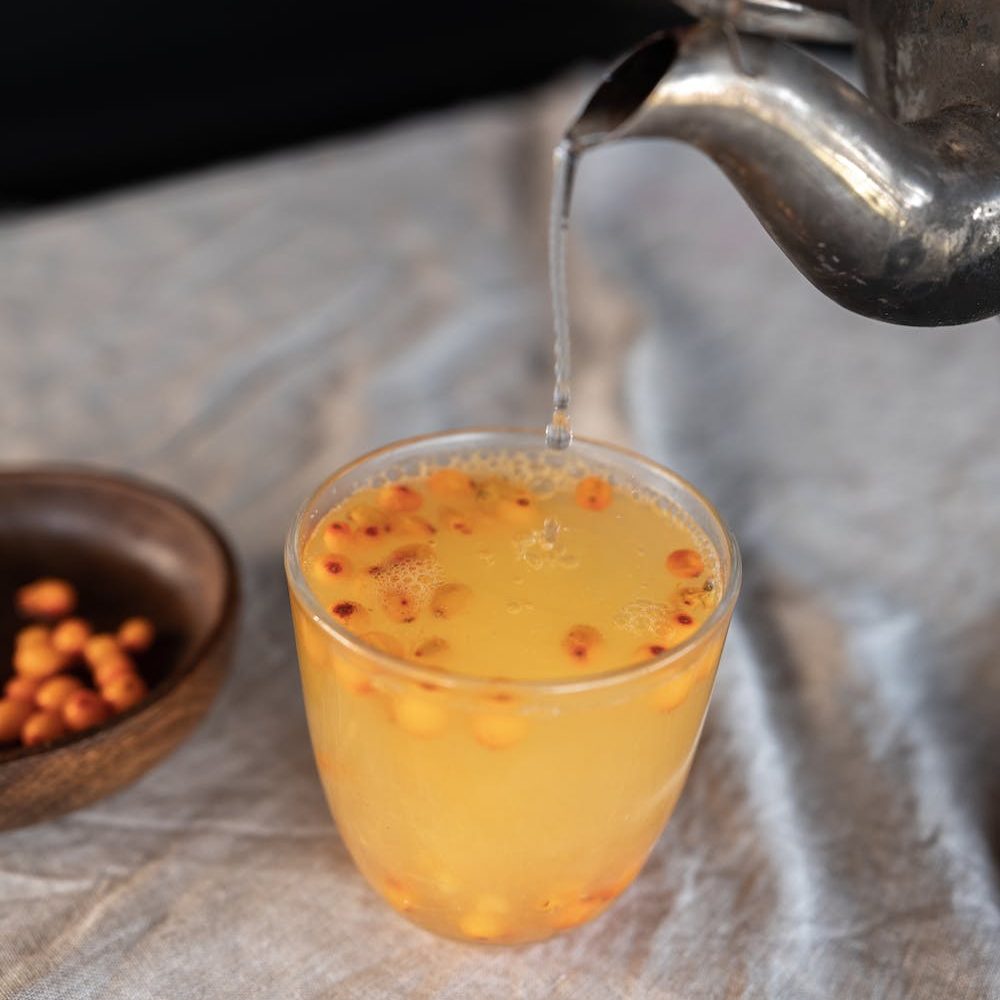
A cup of tea with Sea Buckthorn, is not only a very tasty treat, but one that may promote immune resilience during the colder months.
Sea Buckthorn tea:
500ml water
100gr. Sea Buckthorn
2cm of peeled and grated ginger
½ Stick of Cinnamon
Honey to taste
Put all the ingredients, but not the honey, into a pot and bring to a boil. Simmer for approximately 10 minutes. Remove the cinnamon stick. Then strain the tea making sure to crush the Sea Buckthorn to release the fruit pulp into the tea. Stir. Add the honey once the tea has cooled to a comfortably drinkable temperature.



 Wisdom of Old